Case study · News aggregator
Agregator B2B
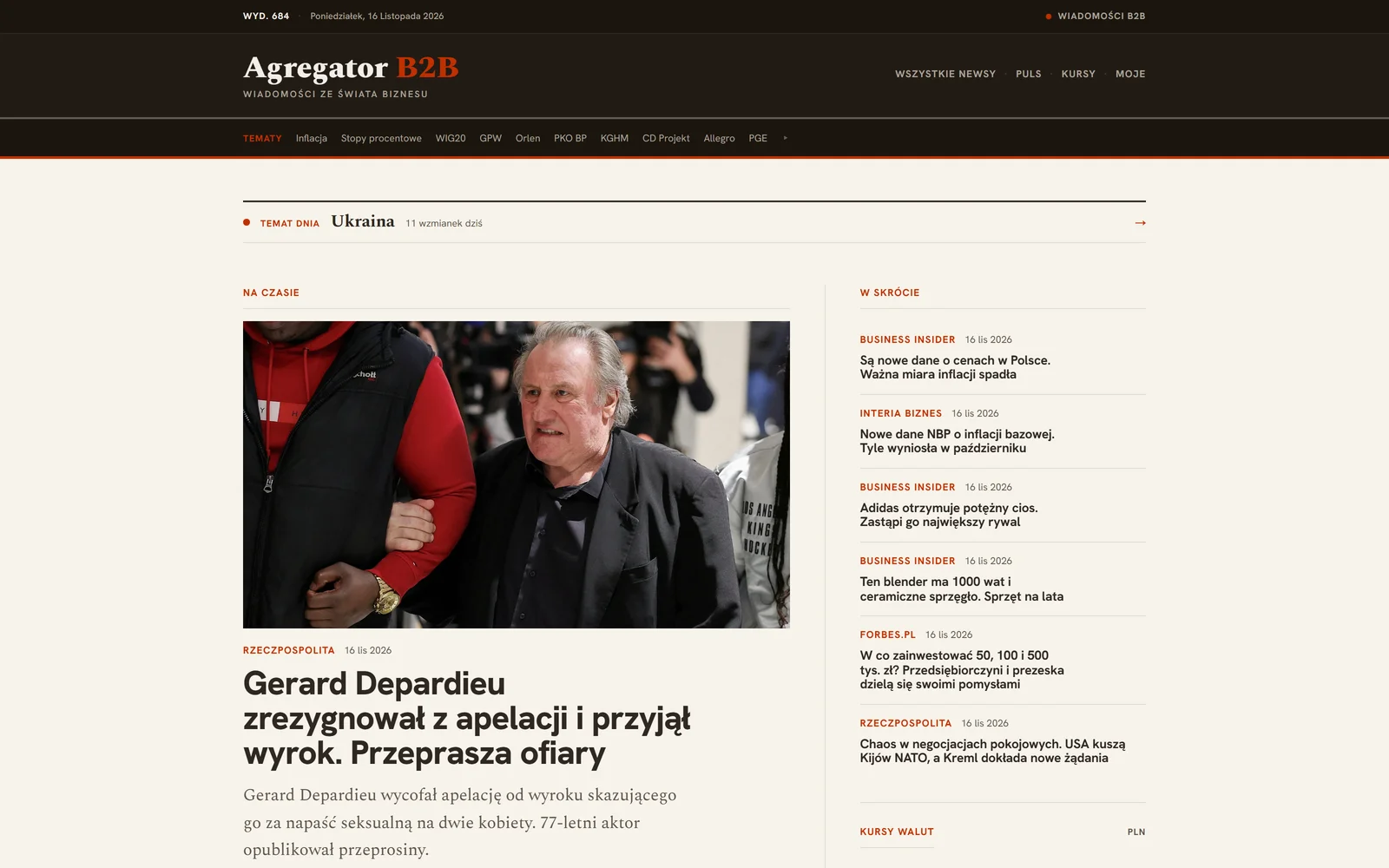
A business news aggregator for people who follow the Polish market: eight outlets in one feed, with repeat coverage folded into a single story.
- 01Problem
- An analyst tracking the market reads several sites at once and keeps running into the same news under different headlines.
- 02Solution
- One site that pulls in news from eight outlets, groups duplicates into stories and organises everything by company, person and topic.
- 03Result
- A public demo with a news feed, a reader view and side-by-side coverage. Development has been on hold since August 2026.
01 · Context
Why it exists.
Anyone following the Polish market keeps several tabs open: Bankier, Parkiet, Rzeczpospolita, Business Insider and more. The same company news shows up on each of them separately, at a different time and under a different headline. I designed for an analyst who wants to know what is going on without reading the same story more than once.
One constraint shaped everything else: the site had to work with no sign-up and no paid services. You open it and start reading, and it costs nothing to keep running.
02 · What I built
What is in it.
- One feed from eight outlets, grouped by day. New stories appear at the top without a page reload, and a calendar takes you back to any earlier day.
- A reader view with the full article in a clean, consistent layout, plus an option to have it read aloud.
- When several newsrooms cover the same thing, it shows up as one story. You can compare their headlines side by side and see who broke it first.
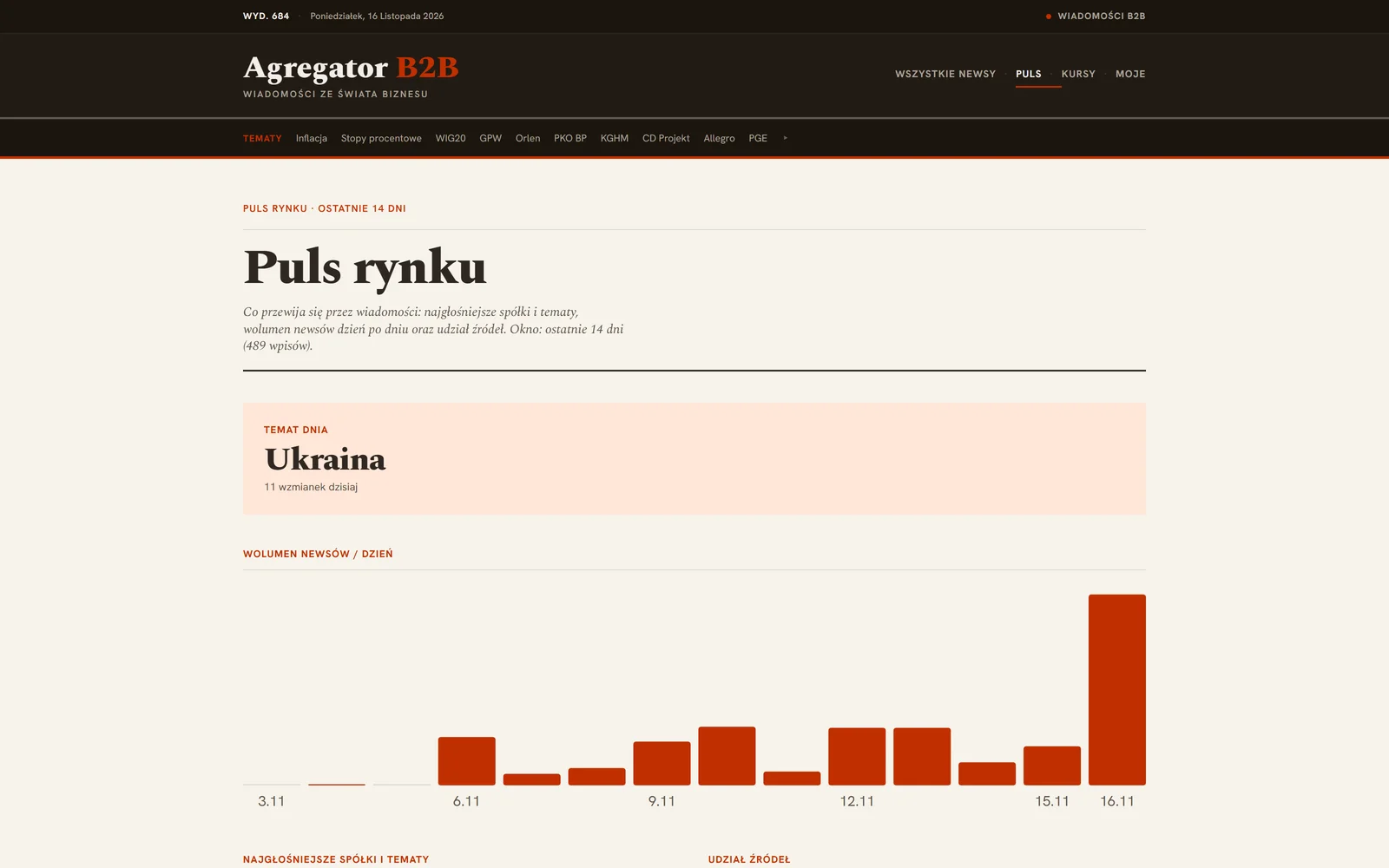
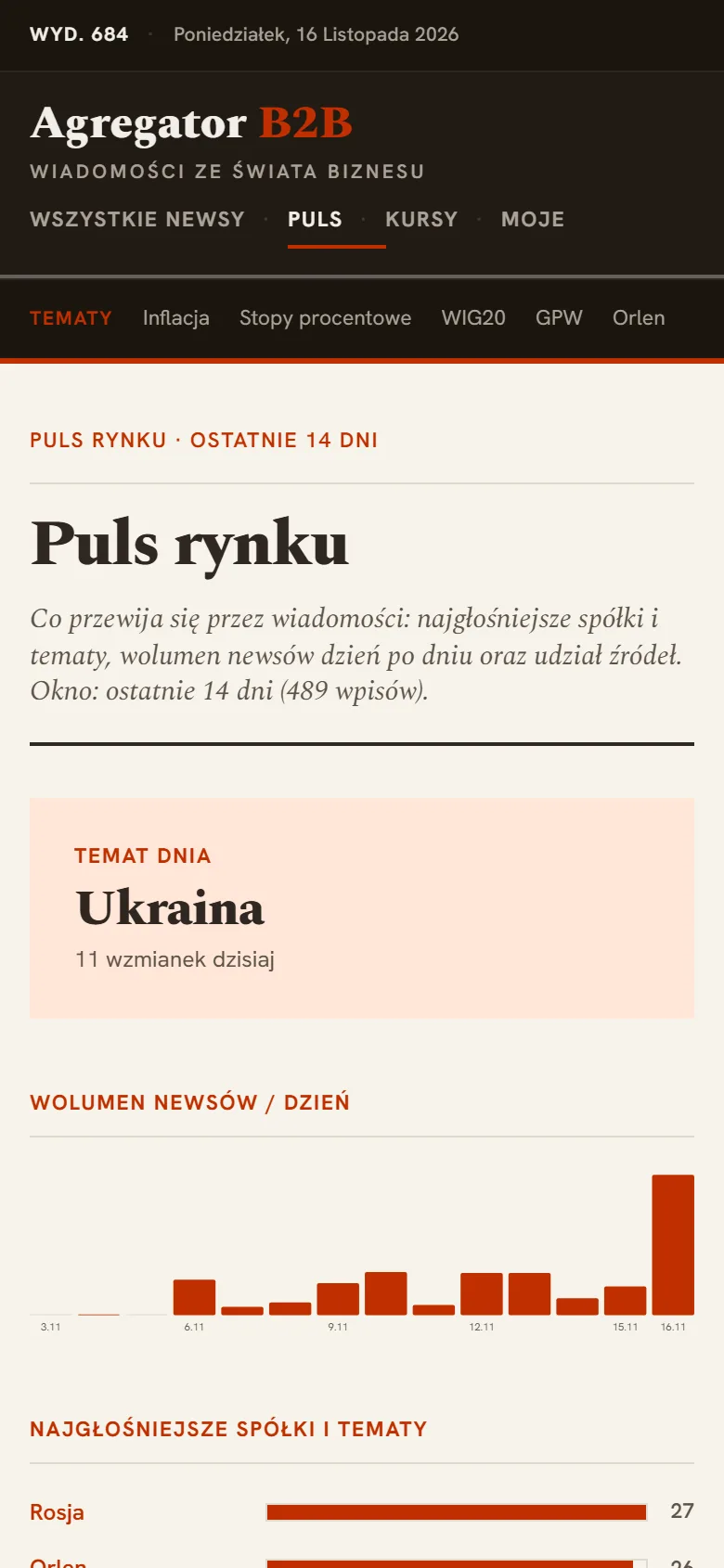
- Pages for companies, people and topics that collect every mention, along with a market pulse view and current exchange rates.
- Follow the topics you care about and save articles for later, no account needed.
03 · Decisions
The decisions that mattered.
I matched stories across outlets without AI, by comparing headlines and the companies they mention.
WhyRunning a language model on every incoming article would mean paying per article. Comparing text is free, and the same news always lands in the same story, so it is easy to see why two pieces were grouped.
Topics come from my own dictionary that understands Polish inflection, not from the tags each outlet assigns.
WhyEvery newsroom tags differently, so one company would end up with several labels, and a plain name search would miss Orlenu or Orlenem. People and topics are only matched in the headline and lead, so their pages do not fill up with passing mentions.
Followed topics and saved articles stay in the reader’s browser, with no accounts.
WhyAccounts would mean a login flow, a user database and responsibility for people’s data, which is all cost and no gain for a demo. The trade-off is that saved items do not follow you to another device.
04 · Status
Where it stands now.
The site is still up as a public demo, but development has been on hold since August 2026. It has not been tested with real users, and followed topics and saved articles do not sync across devices.