Case study · Staff scheduling and timesheets
nexhift
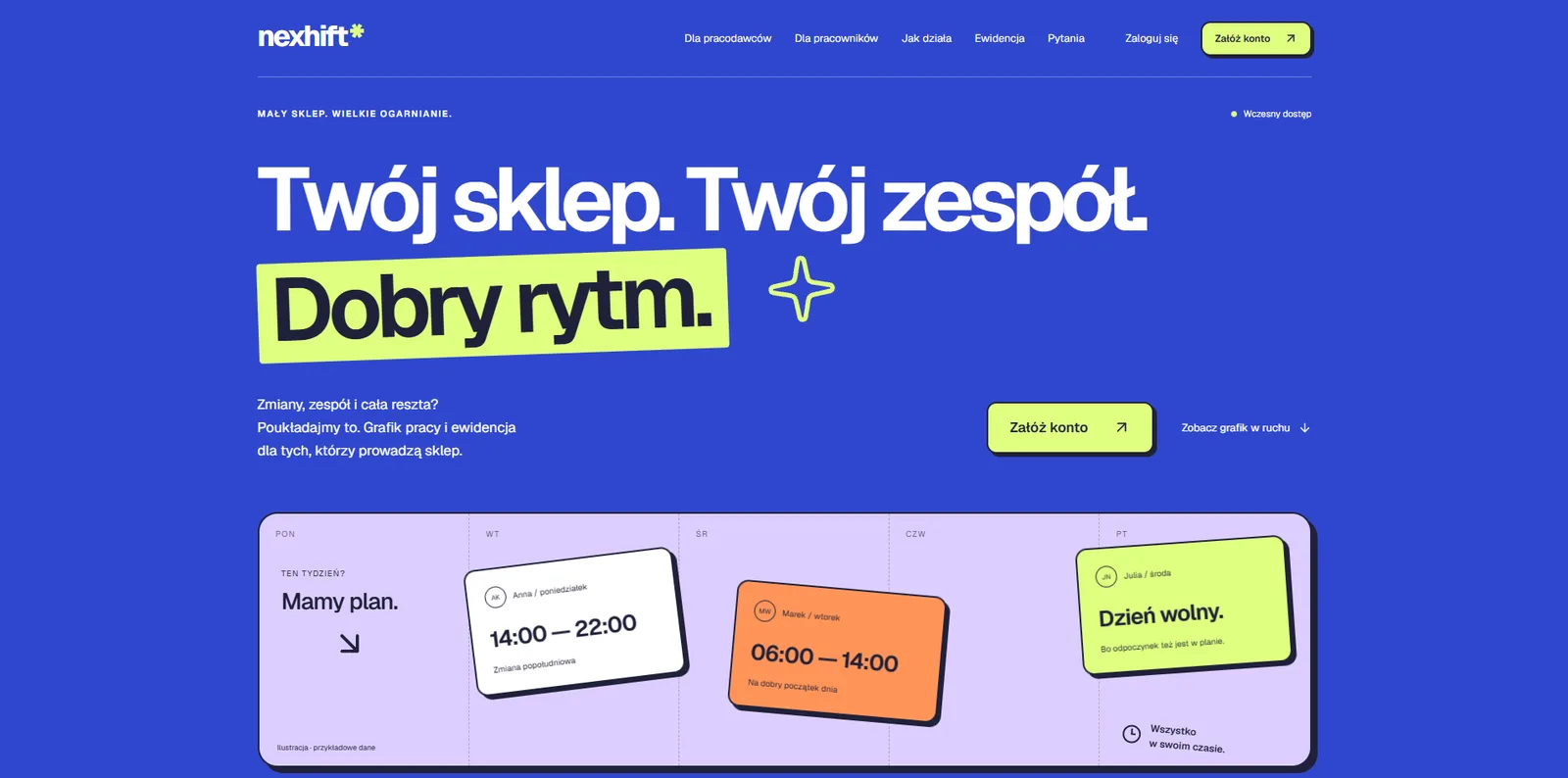
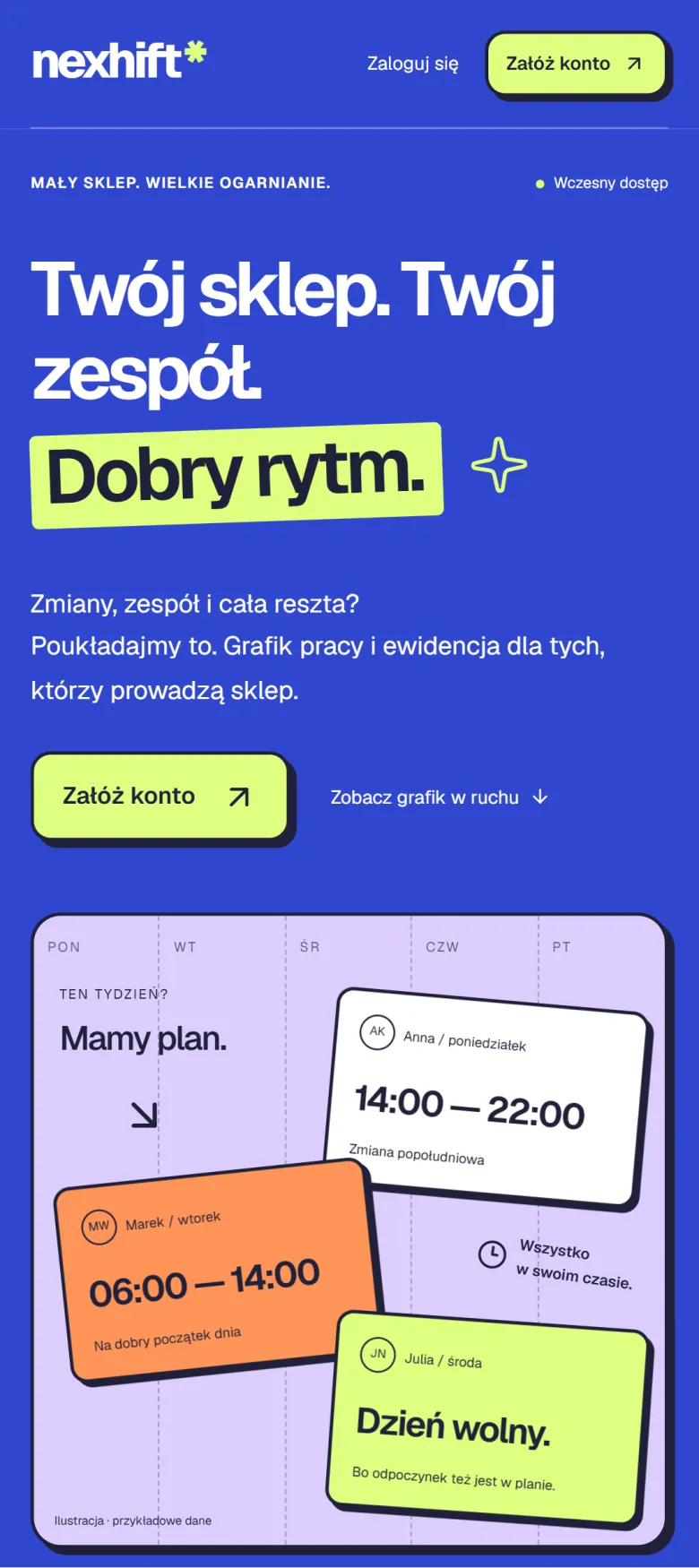
A shift schedule for Polish shops that flags a Labour Code violation as it happens and records when staff were given the schedule.
- 01Problem
- My working assumption: in a small shop the schedule lives in a spreadsheet and gets shared as a photo in a group chat. The spreadsheet knows nothing about non-trading Sundays or daily rest, and in a dispute nobody can prove when staff were told.
- 02Solution
- A weekly schedule that checks the rules as you go, a staffing generator, and monthly publishing that cannot be quietly changed afterwards. The schedule feeds a timesheet that exports to Excel.
- 03Result
- A working manager panel. No outside users or employee app yet, and the rules have not been reviewed by a lawyer.
01 · Context
Why it exists.
Polish retail has rules that popular scheduling tools do not know: non-trading Sundays, mandatory rest between shifts, and different terms for employment and civil contracts. The schedule also has to reach staff at least a week ahead.
My assumption is that in a small shop the schedule lives in a spreadsheet and gets shared as a photo in a group chat. That is an assumption, not the result of talking to shops, and the product says so openly: it does not promise legal compliance it cannot prove. The system points out the problem; the decision stays with the manager.
02 · What I built
What is in it.
- A weekly schedule with drag-and-drop shifts and undo. Two people editing at once cannot overwrite each other’s work.
- Labour Code rules checked as you go, with a warning on any shift that breaks one.
- A calendar of trading Sundays and public holidays for 2026–2027.
- A staffing generator that proposes a schedule within the rules. The manager can reject individual shifts.
- Monthly publishing as a record that cannot be changed, and a timesheet that exports to Excel.
03 · Decisions
The decisions that mattered.
The schedule is built by a predictable algorithm, not an AI model.
WhyThe same month has to produce the same schedule every time, because the schedule is evidence. A language model cannot promise that, and in a trial it even got the number of trading Sundays wrong.
A published schedule is frozen.
WhyIn a dispute, what matters is what the employee received and when. If publishing were only a mark on a schedule that can still be edited, it would prove nothing.
Staff names never reach the AI model.
WhyWhen the manager uses AI suggestions, the model sees pseudonyms instead of names. The type of absence counts as health data, so the system has no way to send it in the first place, rather than relying on someone remembering to strip it out.
04 · Status
Where it stands now.
The manager panel works, but nobody outside the project has used it yet and there is no public address. Before opening it up, it needs the employee app, a lawyer’s review of the rules, and its own email delivery.